When you’re deep in the backcountry, far beyond the reach of cell towers, navigation stops being a convenience and becomes a survival skill. While modern hikers often rely on smartphone apps and constant connectivity, the wilderness doesn’t guarantee signal bars. Knowing which tools work without internet access can mean the difference between a confident adventure and a stressful detour. Fortunately, time-tested navigation methods and offline-ready devices make it entirely possible to find your way—no Wi-Fi required.
TLDR: Reliable hiking navigation doesn’t require an internet connection. Tools like topographic maps, compasses, handheld GPS units, altimeters, personal locator beacons, and offline-capable smartphone apps provide dependable guidance in remote areas. Each offers unique strengths, from battery-free reliability to satellite precision. Carrying multiple tools—and knowing how to use them—creates a safe and effective backcountry navigation system.
Below are six hiking navigation tools that work even when the world goes off-grid.
Contents
1. Topographic Maps (Paper Maps)
Old-school? Yes. Obsolete? Absolutely not.
A detailed paper topographic map remains one of the most reliable navigation tools available. Unlike digital devices, a paper map doesn’t rely on batteries, satellites, or signal strength. It simply works.
Topographic maps display contour lines to show elevation changes, helping hikers identify valleys, ridges, peaks, and water sources. Understanding how to read contour spacing can reveal whether terrain ahead is a gradual incline or a steep climb.
Image not found in postmetaWhy it works offline:
- No power source required
- Immune to weather-related signal disruptions
- Covers large areas at a glance
Best practice: Store maps in a waterproof case and mark potential campsites, water sources, and bailout routes in advance.
Pro tip: A map becomes significantly more powerful when paired with a compass (our next tool).
2. Compass
The compass is the ultimate minimalist navigation device. Compact, lightweight, and nearly indestructible, it provides reliable directional guidance anywhere on Earth.
A high-quality baseplate compass allows you to:
- Determine direction of travel
- Follow a bearing
- Orient your map correctly
- Triangulate your exact position
When used with a topographic map, a compass becomes part of a complete navigation system. Even in dense forest, fog, or snowfall, a compass continues to function.
Why it works offline:
- Uses Earth’s magnetic field
- Requires no batteries
- Functions in all weather conditions
Important: Learn how to adjust for magnetic declination in your region. Failing to do so can cause subtle but significant navigational errors over long distances.
3. Handheld GPS Device
Unlike smartphones that depend on cellular data for mapping features, dedicated handheld GPS units connect directly to satellites. They provide precise coordinates, elevation data, and waypoint tracking regardless of cell service.

Modern handheld GPS units offer:
- Preloaded topographic maps
- Waypoint marking and route tracking
- Breadcrumb trails for backtracking
- Long battery life (often 15–40+ hours)
Why it works offline:
- Communicates directly with GPS satellites
- Does not require internet access
- Works in remote wilderness areas worldwide
Limitations:
- Battery dependency
- Signal obstruction in very deep canyons or dense cover
Always carry spare batteries or a power bank.
4. Altimeter Watch
An altimeter watch measures elevation, typically using barometric pressure. While it doesn’t show your position directly on a map, it provides critical vertical data that can confirm your location when paired with topographic information.
For example, if your map indicates you should be at 6,200 feet near a ridgeline and your altimeter reads 5,400 feet, you know something is off.
Why it works offline:
- Uses atmospheric pressure, not internet
- Provides real-time elevation updates
- Many models include compass and weather alerts
Bonus advantage: Barometric trends can signal incoming storms—an important safety feature when hiking at high elevation.
Note: Altimeters require periodic calibration using a known elevation point for accuracy.
5. Personal Locator Beacon (PLB) or Satellite Messenger
While not strictly a navigation tool, a PLB or satellite messenger plays a vital role in wilderness safety. If you become lost or injured, these devices allow you to send emergency signals via satellite.
Some satellite messengers also offer:
- Two-way satellite texting
- Location sharing with family
- GPS tracking features
Why it works offline:
- Uses satellite networks instead of cell towers
- Functions in extremely remote areas
Important distinction: A PLB is for emergency SOS use only, while satellite messengers offer broader communication features.
This tool doesn’t replace navigation skills—but it adds an essential layer of backup.
6. Smartphone with Offline Maps
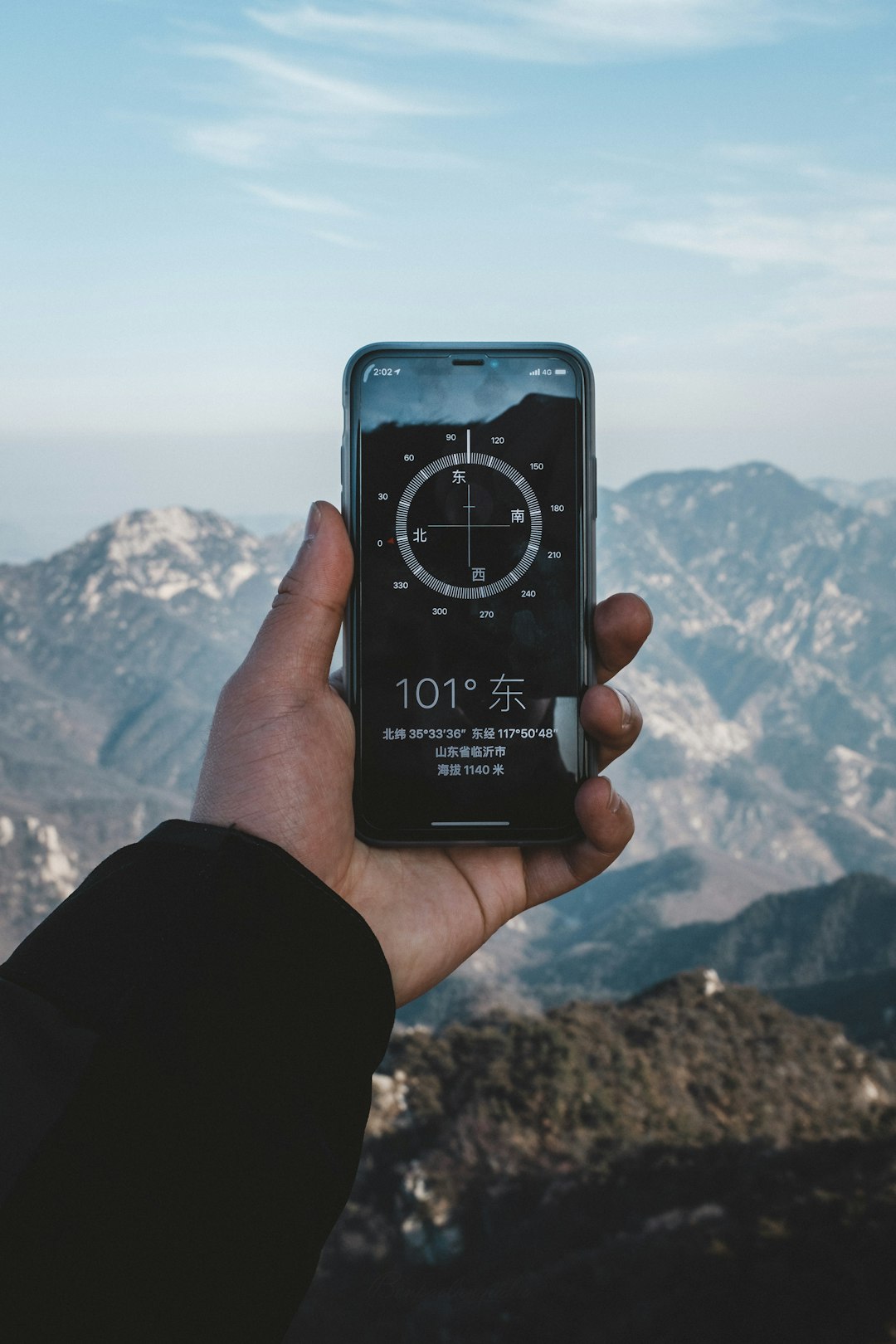
Surprisingly, your smartphone can still be one of your most powerful offline navigation assets—if prepared properly.
Many hiking apps allow you to download detailed maps in advance. Once downloaded, these maps function without cellular service, using built-in GPS hardware to pinpoint your location.
Why it works offline:
- GPS chip does not require internet
- Downloaded maps store locally
- Airplane mode saves battery life
Risks to consider:
- Battery drain
- Fragility in extreme weather
- Over-reliance on a single device
A smartphone should supplement—not replace—traditional tools.
| Tool | Power Required | Accuracy | Best Use Case | Primary Limitation |
|---|---|---|---|---|
| Topographic Map | None | High (with skill) | Route planning and terrain awareness | Requires navigation skill |
| Compass | None | Directional precision | Bearing and orientation | Magnetic declination adjustments needed |
| Handheld GPS | Batteries | Very high (satellite-based) | Waypoint navigation and tracking | Battery dependency |
| Altimeter Watch | Battery | Moderate (elevation-based) | Confirming elevation position | Needs calibration |
| PLB/Satellite Messenger | Battery | High (location transmission) | Emergency rescue | Not for detailed navigation |
| Smartphone Offline Maps | Battery | High (GPS-based) | Convenient real-time location viewing | Battery and durability concerns |
No single tool should be your only strategy. The safest hikers use layered navigation, combining multiple tools for redundancy.
A smart combination might look like:
- Paper map + compass (foundational skills)
- Handheld GPS or offline smartphone app (precision)
- Altimeter watch (terrain confirmation)
- Satellite messenger (emergency backup)
This layered approach ensures that if one device fails—dead battery, mechanical malfunction, water damage—you still have dependable alternatives.
Technology is powerful, but skill is empowering.
Understanding how to read a map, follow a bearing, and identify terrain features strengthens your situational awareness. Instead of blindly following a digital arrow, you begin to truly understand the landscape around you.
Ask yourself:
- Where is the nearest ridgeline?
- Which direction does water flow from this valley?
- How steep is the terrain ahead?
The wilderness rewards those who observe carefully.
Final Thoughts
Hiking without internet access isn’t a limitation—it’s often the goal. Disconnecting from distractions allows for deeper connection with nature. But true freedom outdoors comes from preparation.
Topographic maps and compasses provide timeless reliability. GPS units and offline apps offer precision. Altimeters refine location awareness. Satellite beacons safeguard emergencies.
Equip yourself wisely. Practice your skills before you need them. And remember: the best navigation tool you carry is not in your pack—it’s in your knowledge.
Because when the signal disappears, preparation is what points you home.