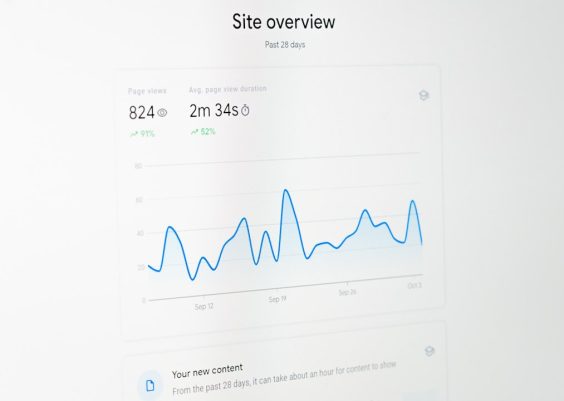
Content marketing has evolved into a data-driven discipline where intuition alone is no longer enough. Modern marketers rely on artificial intelligence to uncover trends, analyze competitors, identify keyword opportunities, and generate actionable insights faster than ever before. AI research assistant software tools are transforming how content strategies are built, enabling teams to work smarter, not harder, while staying competitive in crowded digital spaces.
TLDR: AI research assistant tools help content marketers analyze data, uncover trends, and generate insights quickly and accurately. From SEO research to competitor analysis and content ideation, these platforms streamline time-consuming tasks. The best tools combine automation, data visualization, and intelligent recommendations. Choosing the right one depends on research depth, collaboration needs, and integration with existing workflows.
Below are six powerful AI research assistant software tools that are redefining content marketing research.
Contents
1. ChatGPT (Advanced Research Mode)
ChatGPT has become one of the most versatile AI research assistants for content marketers. Beyond basic text generation, advanced research capabilities allow marketers to gather topic insights, summarize lengthy reports, extract key trends, and even simulate audience personas.
Key strengths:
- Rapid topic exploration and idea expansion
- Summarization of whitepapers and industry studies
- Content brief creation based on search intent
- Persona development and audience pain point analysis
Marketers often use ChatGPT as a first-stage research partner, helping them clarify angles before diving into analytics tools. It excels in synthesizing complex information into digestible summaries.

While it may not replace specialized SEO platforms, it significantly accelerates pre-research and brainstorming phases.
2. SEMrush with AI Enhancements
SEMrush integrates AI-driven insights into its already powerful SEO and competitive analysis suite. For content marketers, it functions as both a keyword intelligence platform and a strategic research assistant.
Key research features:
- Keyword gap analysis against competitors
- Topic clustering and content gap discovery
- Search intent categorization
- AI-driven content templates
Its AI-based recommendations help prioritize topics that combine high traffic potential with achievable competition levels. The tool also provides detailed backlink intelligence and trend forecasting.
Content teams leveraging SEMrush can align editorial calendars with measurable opportunities rather than assumptions.
3. Frase.io
Frase.io is specifically built for SEO research and content optimization. It uses AI to analyze top-ranking search results and generate structured briefs for writers.
What sets Frase apart:
- Automated SERP analysis
- Topic modeling based on competitor content
- Question extraction from search queries
- AI-assisted outline generation
Frase significantly reduces manual competitor research, producing structured outlines that align with what is currently ranking. For research-heavy industries, it ensures that content addresses all necessary subtopics and questions.

Its research-to-brief workflow is especially beneficial for teams managing multiple writers.
4. BuzzSumo
BuzzSumo focuses on content trend discovery and performance analysis. Its AI-enhanced capabilities analyze engagement metrics across social media and web platforms to identify trending topics.
Primary benefits:
- Trending content identification
- Influencer research
- Social engagement tracking
- Competitor content benchmarking
For marketers concerned with virality and audience resonance, BuzzSumo offers unmatched visibility into what is gaining traction in specific industries.
This makes it ideal for planning blog topics, thought leadership pieces, or viral campaigns rooted in real-time engagement data.
5. MarketMuse
MarketMuse uses advanced AI algorithms to analyze content depth, authority, and topic gaps across entire websites. It goes beyond keyword research to evaluate topical authority.
Notable features:
- Content inventory analysis
- Authority scoring
- AI-driven topic suggestions
- Strategic content planning
MarketMuse helps marketers determine where their content ecosystem is weak and where expansion would generate the most impact. It is particularly effective for enterprise-level strategies focusing on domain authority growth.
The platform also prioritizes updates to older content, identifying pages that require optimization to maintain competitive rankings.
6. Clearscope
Clearscope specializes in content optimization based on data-driven keyword analysis. While similar to Frase in some respects, it is widely praised for its usability and precision.
Core capabilities:
- Term relevance scoring
- Content grading system
- Competitive keyword analysis
- Readability and optimization suggestions
Clearscope’s intuitive interface allows writers and editors to understand optimization requirements without advanced SEO knowledge. It aligns content quality with measurable search criteria.

This makes it particularly useful for teams seeking a balance between SEO performance and content readability.
Comparison Chart: AI Research Assistant Tools
| Tool | Primary Focus | Best For | AI Capabilities | Ideal Team Size |
|---|---|---|---|---|
| ChatGPT | General research and synthesis | Idea generation and summaries | Natural language analysis, summarization | Solo to enterprise |
| SEMrush | SEO and competitor research | Keyword and market analysis | Predictive insights, keyword clustering | SMB to enterprise |
| Frase.io | SERP research and brief creation | SEO optimized articles | Topic modeling, automated outlines | Content teams |
| BuzzSumo | Trend analysis | Viral content planning | Engagement analytics, trend detection | Marketing teams |
| MarketMuse | Content authority building | Strategic expansion | Content gap analysis, authority scoring | Enterprise teams |
| Clearscope | On-page optimization | SEO content refinement | Relevance scoring, grading system | Writers and editors |
How to Choose the Right AI Research Assistant
Not every tool fits every content marketing strategy. Selecting the right AI research assistant depends on specific goals:
- For ideation and research synthesis: ChatGPT is highly efficient.
- For deep SEO research: SEMrush offers comprehensive competitive intelligence.
- For structured SEO briefs: Frase.io provides streamlined workflows.
- For social trend analysis: BuzzSumo delivers real-time engagement insights.
- For authority building: MarketMuse supports long-term strategy.
- For content optimization: Clearscope refines and scores drafts.
Many organizations combine multiple tools to cover different stages of their research pipeline. For example, ChatGPT may assist with brainstorming, SEMrush with keyword discovery, and Clearscope with final optimization.
Final Thoughts
AI research assistant software tools are no longer optional in competitive content marketing environments. They enhance speed, reduce manual analysis, and improve strategic decision-making. Instead of replacing marketers, these tools augment their capabilities, allowing teams to focus on creativity and storytelling.
As artificial intelligence continues to evolve, research assistants will become more predictive, personalized, and integrated with broader marketing ecosystems. Organizations that embrace these technologies early gain measurable advantages in efficiency, performance, and scalability.
Frequently Asked Questions (FAQ)
1. Are AI research assistant tools suitable for small businesses?
Yes. Many platforms offer scalable pricing models. Tools like ChatGPT and Frase are particularly accessible for small teams.
2. Can AI research tools replace human marketers?
No. These tools enhance research and analysis but still require human creativity, strategy, and contextual judgment.
3. Which tool is best for SEO-focused content marketing?
SEMrush, Frase.io, and Clearscope are highly effective for SEO-driven strategies, each serving different stages of optimization.
4. How accurate are AI-driven keyword suggestions?
Accuracy depends on data sources and algorithm quality. Leading platforms like SEMrush and MarketMuse use extensive datasets for reliable recommendations.
5. Is it beneficial to use multiple AI research tools?
Absolutely. Many content teams integrate multiple platforms to cover brainstorming, keyword research, trend analysis, and optimization.
6. Do these tools integrate with CMS platforms?
Most leading tools offer integrations with popular CMS systems such as WordPress and collaboration platforms like Google Docs.
By leveraging the strengths of these AI research assistant tools, content marketers can build smarter, data-informed strategies that deliver measurable growth and sustained impact.